The Victims of the School-To-Prison Pipeline
The school-to-prison pipeline has
been becoming an even bigger issue as of late which has caused people to take a
closer look at what is really going on. The big discussion topics concerning
the school-to-prison pipeline are usually the most obvious issues with the
school system. One thing that is being discussed more often now is the fact
that most of the students that are facing these harsh problems are black. Even
more shocking is the age that this issue can start. Some students are on track
to the school-to-prison pipeline as early as kindergarten. Both of these are
huge issues that are not always discussed and I feel passionate about.
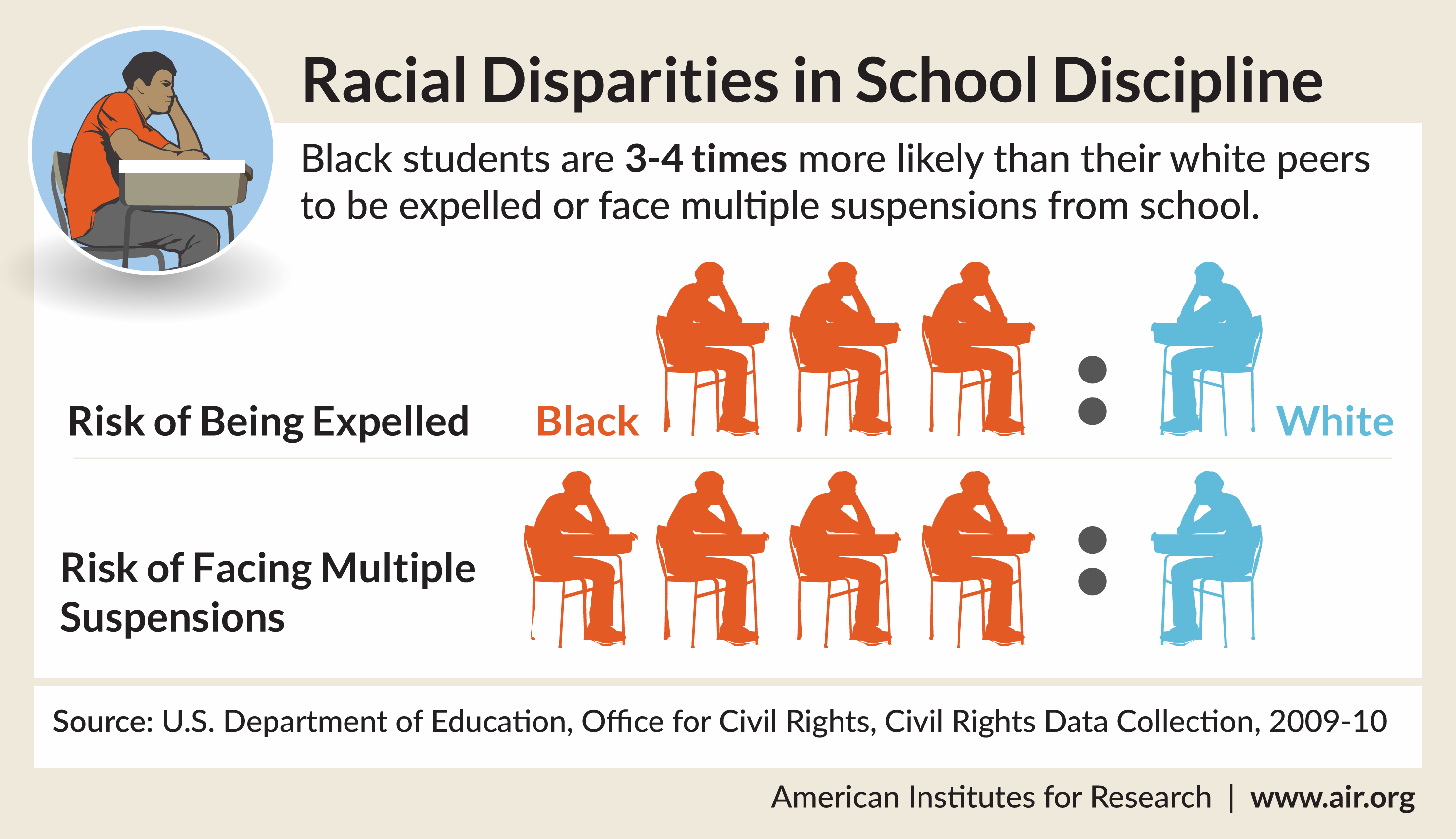
Hackett
(2018) tells of a study that finds that black students “accounted for 15.5
percent of all public school students, but represented about 39 percent of
students suspended from school”. Which is a huge issue when you stop to think
about it. On top of this, “18 percent of the nation's public school students
are black but an estimated 40 percent of all students that are expelled from
U.S. schools are black” (Lynch, 2016). After looking at these numbers, it is
very clear that something is wrong with the way things are currently being
done. Decaille (2017) writes of different incidents in which young black girls
had to leave their school due to their hair styles not following the school dress
code. I could be wrong, but I do not really see how a hair style affects a
student’s learning or says anything about their behavior in anyway. Some say
that this could be the result of a cultural disconnect and others feel that it
is “racially motivated” (Decaille, 2017).
In addition to this, Decaille (2017)
also tells of a sixteen year old student from South Carolina who was ripped out
of her desk by a police officer for not listening to her teacher. Her friend
caught this on tape and it has become viral on the internet (Decaille, 2017).
Many parents became outrage after this event asking if the police officer “would
have treated a white female student the same way” (Decaillle, 2017). The issue
with all of these cases is, no matter what the girl did, even if it was as
insignificant as wearing her hair in braids, the result was a young black girl
being criminalized. Her teachers and anyone else that she might have interacted
with would just assume she is a bad child because she was expelled from school
or what have you. These labels are extremely hard to get rid of once they are
placed on a child and can often cause the child to head down the troubled path
that is expected of them.
Even
more shocking than the race issue is the age that this issue can start. Some
students are track to the school-to-prison pipeline as early as kindergarten.
It is usually thought that all students start on an even playing field in kindergarten
but this not true. Lynch (2016) states that these students are “already
products of their limited life experiences but their public school classrooms
are intended to be equalizers”. Some children have already attended preschool
or daycare before kindergarten and some have parents who have been singing the alphabet
and reading to them for two years. Other children have parents who spend most
of their time working and do not have as much time to devote to preparing or
over preparing their kids for school. Lynch (2016) also discusses how “the
behavior of children is impacted by their life experiences and that behavior
does impact the way a classroom functions”. Kindergarten is just the first time
that students are placed in a school setting in which they are judged for
behaviors they did not know were “appropriate”. This eventually just becomes a
spiral where the children who have “bad” reputations are literally preceded by
their reputations and have little to know chance to change them. This basically
means that the way that you acted in kindergarten can shape the way you are
treated in high school and you eventually display the behaviors that are
expected of you.
To
conclude, black students are usually victims of the school-to-prison pipeline
more often than anyone else. These can be due to many different issues such as
cultural differences or just blatant racism. The school-to-prison pipeline can
also start as early as kindergarten and the children are given almost no chance
to disprove their reputations throughout their entire schooling. Most of these
children have little to no control over how they will be treated because it
based all on their race or something they did when they were five that they do
not even remember.
References
Decaille, N. (2017). Biased
discipline policies put black girls on the school-to-prison pipeline. Vice Impact. Retrieved from https://impact.vice.com/en_us/article/j55p58/biased-discipline-policies-put-black-girls-on-the-school-to-prison-pipeline
Hackett, A. (2018). Black students
are disproportionately disciplined in public schools. Pacific Standard. Retrieved from https://psmag.com/education/black-students-are-disproportionately-disciplined-in-public-schools
Lynch, M. (2016). Black boys in
crisis: the school-to-prison pipeline. Education
Week. Retrieved from https://blogs.edweek.org/edweek/education_futures/2016/08/black_boys_in_crisis_the_school-to-prison_pipeline.html


Comments
Post a Comment